








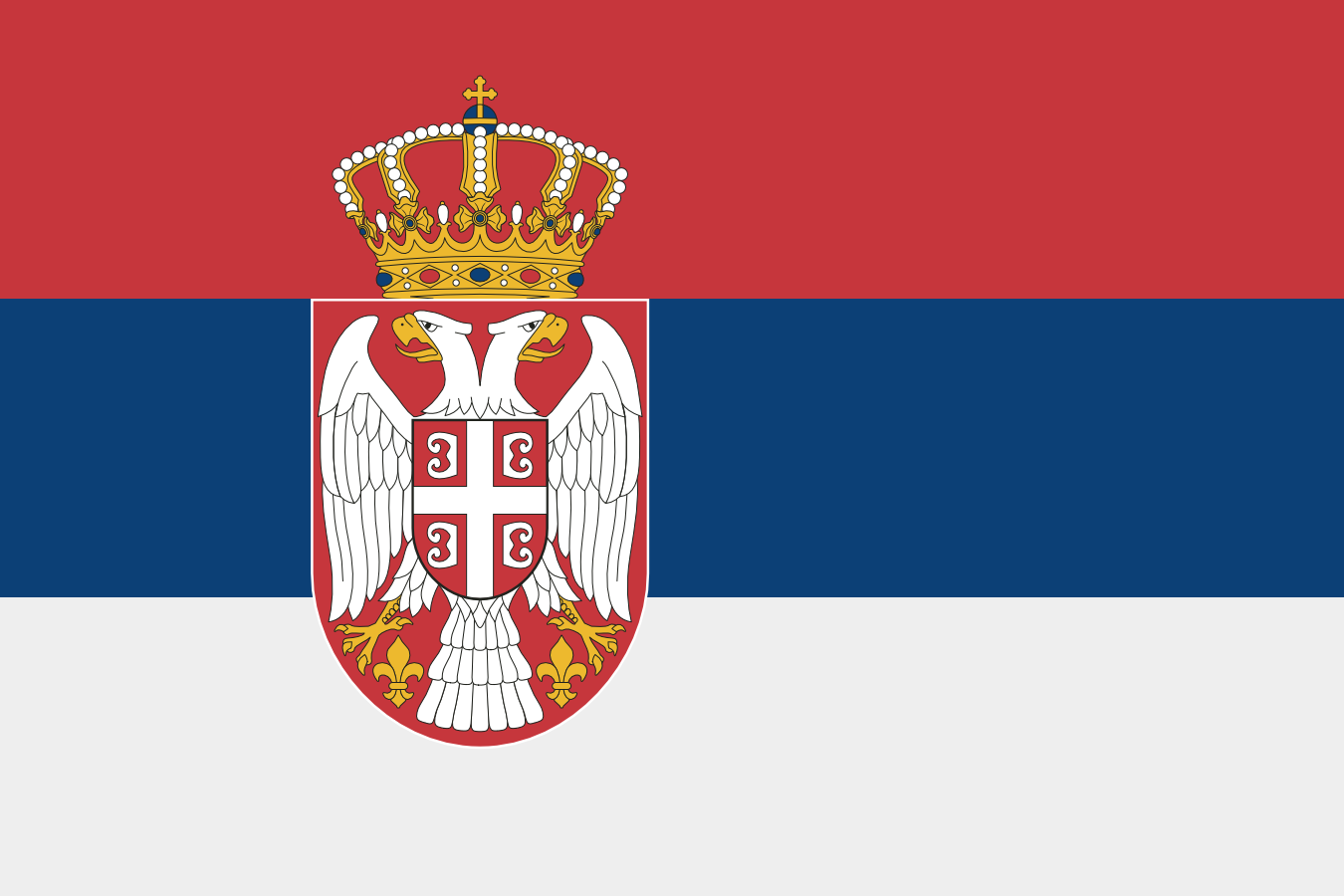
 SERBIA
The following shows a line chart of the opinion polls conducted after the
2023 Parliamentary Election until the 2026 Parliamentary Election.
Serbia holds an early parliamentary election on 25 October 2026, more than a year before the regular deadline of 31 December 2027. President Aleksandar Vučić called the vote in September. His Serbian Progressive Party (SNS) has governed since 2012; Vučić himself was elected president in 2017 and re-elected in 2022. Prime Minister Đuro Macut has led the government since April 2025, after Miloš Vučević resigned in January 2025.
The campaign follows the collapse of the canopy at Novi Sad railway station in November 2024, which killed people and set off a student-led protest movement against corruption. One of its central demands was a snap election. The movement now runs its own Student List, which several opposition parties backed by withdrawing their own lists. Critics, including international observers, regard Serbia as an electoral autocracy, while supporters of the government point to economic growth.
At the last election in December 2023, the SNS-led list won 48.1 % and 129 of 250 seats, ahead of the opposition list Serbia Against Violence (24.3 %, 65 seats); the opposition alleged fraud and protested. Polls now show a much tighter race between SNS and the Student List, with some pollsters putting each of them ahead. Other lists include the Socialist Party (SPS) of Ivica Dačić, European Serbia, the right-wing NADA coalition of Miloš Jovanović and several national minority lists.
The National Assembly has 250 members, elected for four years. The whole country forms one single constituency: there are no regional districts and no direct candidates. Voters choose one closed party list, and the seats are distributed among the lists with the D'Hondt method. A majority needs 126 seats.
A list needs at least 3 % of the votes cast to enter parliament. Parties of national minorities are exempt from this threshold and share in the seat allocation even with a lower result. Lists must collect 10,000 valid signatures to be registered (5,000 for minority lists), and at least 40 % of the candidates on each list must be women.
The maps on this page show the results by municipality and by the 25 administrative districts. These are only statistical and administrative units, not electoral districts, so no seats are awarded locally. Kosovo is not included.